
What a difference a few weeks makes. On Thanksgiving, we reported that President-elect Obama’s short-list of candidates for Secretary of transportation included three strong cycling advocates, two of them nationally-known:
• Representative Jim Oberstar — A Minnesota Democrat and nationally-renowned member of the Congressional Bike Caucus. Representative Oberstar chairs the House Transportation and Infrastructure Committee.
• Representative Earl Blumenauer — A Democrat representing Portland, Oregon, Representative Blumenauer—another nationally renowned Congressional Bike Caucus member and founder of the Bike Caucus—sits on the House Select Committee on Energy Independence and Global Warming.
• Representative Peter DeFazio — Another Oregon Democrat, and yet another member of the Congressional Bike Caucus, Representative DeFazio is a senior member of the House Transportation and Infrastructure Committee.
While other short-list names were also being bandied about, the buzz around these cycling advocates was so strong that we had reason to hope for the best. Supporting that hope were candidate Obama’s own words from his record-breaking Portland rally:
“If we are going to solve our energy problems we’ve got to think long term. It’s time for us to be serious about investing in alternative energy. It’s time for us to get serious about raising fuel efficiency standards on cars. It’s time that the entire country learned from what’s happening right here in Portland with mass transit and bicycle lanes and funding alternative means of transportation.”
As we noted, this wasn’t just the rhetoric of a tough primary campaign; five months later, in the midst of an equally tough national campaign,Obama reaffirmed his intention to fundamentally alter our transportation paradigm:
“…Everyone benefits if we can leave our cars, walk, bicycle and access other transportation alternatives. I agree that we can stop wasteful spending and save Americans money, and as president, I will re- evaluate the transportation funding process to ensure that smart growth considerations are taken into account.
“I will build upon my efforts in the Senate to ensure that more Metropolitan Planning Organizations create policies to incentivize greater bicycle and pedestrian usage of roads and sidewalks. And as president, I will work to provide states and local governments with the resources they need to address sprawl and create more livable communities.”
And let’s not forget the private get-together candidate Obama had with bicycle industry leaders and the Bikes Belong board—a get-together organized by SRAM CEO Stan Day and held at the Chicago home of SRAM Vice President F.K. Day. At that meeting, Obama told the Bikes Belong board that, if elected President, he would increase funding for cycling and pedestrian projects, and would support the Safe Routes to Schoolsprogram. Noting that during the campaign, he seldom made promises on what he would do if elected to the Presidency, Obama assured the Bikes Belong board that this was a promise he would keep.
So when we heard the buzz about the short list, we had reason to hope for a strong cycling advocate in the Cabinet. However, responding to the buzz, Representative Oberstar expressed some doubt that he would be interested in a cabinet position, while Representative Blumenauerappeared to rule it out entirely. Still, presented with a firm offer from the President-elect, they might see things differently, no?
We’ll never know. On Wednesday, it was reported that the Cabinet position had been offered to Representative Ray LaHood, and that he had accepted. Today, that report was confirmed when President-elect Obamaannounced the nomination of Representative LaHood as his Secretary of Transportation.
Who?
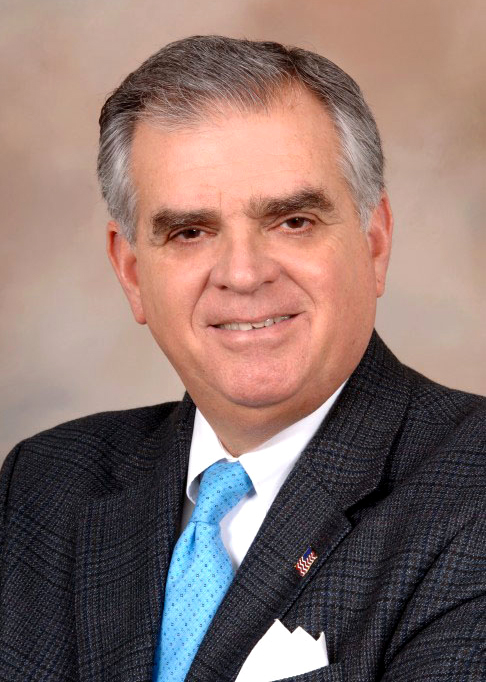
Ray LaHood is a retiring Congressman from Peoria, Illinois. A Republican who was first elected to Congress in the “Republican Revolution” of 1994, LaHood has from the beginning developed a reputation as a moderate, beginning with his refusal to sign Newt Gingrich’s “Contract with America,” and continuing with a record of bipartisanship and support for public transportation and Amtrak. And while he doesn’t have the cycling advocacy reputation of an Oberstar or a Blumenauer, he is a member of the Congressional Bike Caucus, which gives him tons more bike cred than his fellow Republicans Patrick McHenry or the current Transportation secretary, Mary Richards.
Those are the pros. The cons? LaHood’s extremely thin transportation resume, and his lifetime rating of 27% from the League of Conservation Voters —not what one would expect for the Cabinet member who presumably will be tasked with leading the way on rethinking our nation’s transportation policy, and implementing the changes candidate Obama has spoken so consistently about.
Perhaps President-elect Obama envisions a different role for his Transportation Secretary. Given LaHood’s thin resume, and his close ties to the highway construction unions, LaHood may have been tapped for his ability to push through the massive infrastructure-building programs President-elect Obama has identified as a key component of his economic recovery program. We may in fact be seeing more transportation policy leadership from the House Transportation Committee—which is where both Committee Chair Oberstar and Representative Blumenauer elected to stay—and the White House itself, with the bipartisan consensus-building in support of that policy coming from Secretary LaHood.
For now, it’s still too early to tell.

Almost a third of the House is in the Congressional Bike Caucus. When so many are in it, does its status diminish? I don’t know much about it, but all I gather from the link you provided is that these are a bunch of people who get their name on a list that looks sort of good and maybe talk about bikes together every once in a while. Is there better reason I have not yet seen to convince me that the Congressional Bike Caucus is significantly more than just a political tactic (and quite a good one for Mr. LaHood, who allegedly is much more well-versed in dealing with auto and highway workers)?