
This story is currently under development; stay tuned, and come back soon for the first of an in-depth, multi-part series on the Idaho stop sign law, and proposed legislation in other states that is modeled on the Idaho law.
Breaking Story — Analyzing The Idaho Stop Sign Law
You May Also Like
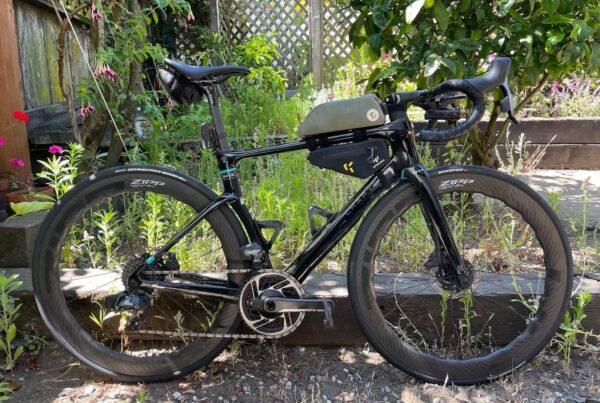

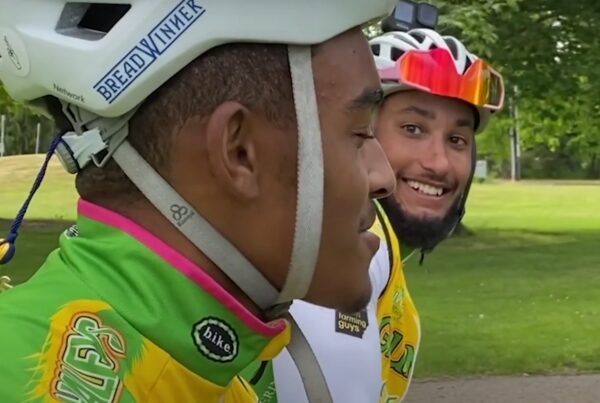
Riding and changing lives
Bob Mionske interviews the executive director and members of the b.i.k.e. community.
BicycleLawDecember 17, 2021
Stay Seen, Stay Safe?
Stay Seen, Stay Safe. For the last 14 years, beginning in Bicycling & the Law,…

Rick BernardiJuly 27, 2021
While on a level I do agree with this proposal, how will you get this information to all motorists? Right now, in Florida, even with the 3 ft clearance when passing in effect, very few motorists know of and comply with it. This will require a massive, if not, impossible re-education effort to get the word out, then motorists will still have the attitude the we (cyclists) feel we are better than them
I think your headline is misspelled. Don’t you mean “braking” story? 😉
How does this work at 4-way stops when the motorist arrives first?
I think the real story here is that there are too many stop signs that should instead be yield signs.
Hi,
For stop on yield, why single out cyclists? All vehicles use rolling stops for stop signs, and it’s pretty much accepted — you stop until you have right-of-way, but if you can see as you approach that you already have right-of-way, then you roll through. I would be fine with this.
It sounds like the Oregon law turns right-of-way on it’s heads, viewing the cyclist as outside of traffic, free to go when they can, but required to yield in the presence of any other traffic. That doesn’t sound like progress at all.
And red-as-stop, that’s a whole ‘nother ball game. I’ve seen too many dangerous situations created by cyclists jumping the light.
I’ve been following this closely since I read Bob’s book a couple of years ago. The city of San Francisco has been discussing this lately. Of course, when drivers are interviewed about this, they say its not right and unsafe.
The truth is that its more safe in my opinion. From experience, I’ve found that it is much safer for me to roll through at a stop sign when I have the right of way. I yeild to all vehicles. If I have to stop, I do. Unfortunately, many cars get impatient waiting for a cyclists to start from a dead stop, clip in and pedal through the intersection. Many times, I’ve had cars just go through before me anyway.
Most of the car traffic in my town is pretty relaxed to this. Even the cops won’t pull you over if you practice the Idaho approach to the stop signs.
Its the minority of cars I see that, buzz you as they drive by, go through the stop sign ahead of you knowing that your there, and/or pull over to the side of the road in-front of you to make sure you stop at the stop sign.
In all my riding, I do it defensively. Primarily because when I do run into those incidences, I find that about half the people didn’t even see me.
As a cyclist and an insurance professional I beleive this is a bad idea. Why place cyclists in a different category than other vehicles? I think the only thing it will do is advance the perception that cyclists are better than other users of the road. Everyone should have to follow the same rules, regardless if they are on a bicycle or in a motor vehicle.
I have some concerns about applying lessons learned in Idaho or Oregon to New York City or Washington, DC. In my experience, there is much truth to the cliches about the relative manners of East Coasters and everyone else.
That point aside, one must ask: What’s the purpose of anyone waiting for a red light to turn green? If it’s safe for a bicyclist to blow through after looking around, why shouldn’t cars and trucks do it too?
I’m a scofflaw (daily 15 mile commute over suburban/rural roads), and I think the law is a great idea. While I don’t really care what motorists think about cyclists as long as they don’t hit me, I’d welcome the protection of the law from overzealous cops. And, yes, I think I’m superior because I choose a bicycle as a method of transportation.
I think cyclists should give up the idea we’re somehow going to make motorists more forgiving by either adhering to the letter of traffic laws or through education. It’s just not going to happen. We’re tolerated; nothing more, and one doesn’t have to be an expert in the human condition to understand that’s all we’ll ever be. There’s no test for empathy in order to qualify a 16 year-old for a driver’s license.
Traffic control devices are put where they are obstensibly to protect people from the actions of others. If I get hit running a stop sign, I’m going to be the only one hurt, and it’s my own responsibility.
If yielding at stops is okay for cyclists, then it ought to be okay for everybody.
I’ve heard the argument that cyclists can see better. In that case, motorcyclists should also be allowed to yield at stops. And maybe people driving convertibles with the top down. And people driving cars that have short hoods.
I’ve heard that cyclists are environmentally superior. In that case, electric vehicles, and perhaps hybrids, should be allowed to yield at stops.
I’ve heard the argument that cyclists rarely comply with the stop law, so we should change the law. But motorists also rarely comply with the stop law.
Pragmatically, how do you convince the majority (motorists) to grant a special right to the minority (cyclists)? Especially when it’s a right that the majority would certainly also want for themselves?
My last motoring ticket, many years ago, was for not stopping completely at a stop sign. I didn’t interfere with other traffic, but my wheels didn’t completely stop. My speed was close to, but not quite, zero.
Had I been going 5 MPH over the speed limit, I would have been ignored. How about defining “STOP” as anything under 5 MPH?
MikeonaBike (and some others)–in my opinion, you’re creating the wrong distinction. We’re talking about exceptions to the rules for cyclists with respect to traffic control devices. The purpose of traffic control devices are to ensure the safe and orderly management of traffic flow. OUr society values safe and orderly traffic flow because the consequence of a fellow motorist not following the same set of rules can be substantial property damage or bodily injury. The reason cyclists should be granted some exception to the rules is not due to any superiority–moral or environmental–but because the consequence to the other road user for us screwing things up is minimal. The reason motor vehicles of any stripe should not have exceptions is because the consequence for their screwups is much larger.
“Once the person has yielded, he may proceed through the steady red light with caution. ” People are going to get killed with this one. A bike starts to squeeze through the intersection thinking “now I’ve got the right of way’ while the car pulling out of the gas station and accelerating through their green light thinks they have the right of way. The bike rider is going to loose. Coming to a stop at a sign or a light is not that big a deal IHMO. I’ve never understood the problem during ‘normal’ traffic hours. When I’m stuck at a timed light and there is absolutely no one there at 6 am, then yes I’ll run the red light, otherwise I stop and wait. It’s not a time trial.
In further support of Michael Brown’s statements:
The idea that bicycles deserve special legal distinction with regard stop signs and stop lights (as opposed to regular automobile traffic) is a natural extension of legislation to promote less polluting and less congesting transportation like hov lanes, bike lanes, lane splitting for motorcycles, bus turn only lanes, etc.
Respectfully responding to John Schroeder:
The death of the bicyclist in your example is a personal tragedy, but not a societal one. Laws are passed to ensure society’s functioning, and we accept a degree of infringement on personal liberty to advance that goal.
I suppose one could make the argument that society bears some cost if the cyclist is injured in the form of health care, disability, family aid, etc.. But so far in America that argument hasn’t trumped the recognition of individual rights. It’s a statistical fact that motorcycle helmet laws reduce the incidence of death and seroius injury in the event of an accident. Yet some states don’t have such laws. I think that would fall under the concept that if motorcyclists (and bicyclists) are dumb enough to ride without a helmet, they can suffer the consequences.
I have to agree with John Schroeder that this change in the law would be unsafe for cyclists. Assuming the traffic engineers have done their jobs well (ok, that is a big assumption), the stop sign is there for a reason – due to traffic volume, proximity of a blind hill or intersection, etc…. Why should a cyclist be allowed to treat the intersection any differently than any other road user? I personally know 2 cyclists who were killed when they rolled stop signs (one was hit by a truck coming over a blind hill and the other by a truck that was moving more quickly than the cyclist must have realized). Yes these were personal tragedies, and as Michael Brown points out, these cyclists (and their families) certainly did suffer the consequences of their actions, but they probably would have been avoided if the cyclists had come to a complete stop and fully assessed the traffic situation (as required by the law in the state where these incidents took place).
Perhaps it would serve all of the road users better to re-assess stop sign placement and change unnecessary ones to yields (although I recognize that isn’t going to happen anytime soon either).
I just feel there are a lot of other areas we could be putting our energy – educating motorists to our current rights on the road for one.
Quoting MikeOnBike: “I think your headline is misspelled. Don’t you mean “braking” story? ;-)”
Thanks for the tip; see the next post. 😉
Quoting MikeOnBike: “How does this work at 4-way stops when the motorist arrives first?”
The motorist would have the right of way, and while the cyclist would have the choice of slowing or stopping, the cyclist would be required to yield the right of way.
Quoting John Schroeder: “‘Once the person has yielded, he may proceed through the steady red light with caution.’ People are going to get killed with this one.”
That is the law in Idaho; the proposed law in Oregon does not contain that provision. Cyclists in Oregon would still be required to stop on red and remain stopped until the light turns green.
For everybody who has contributed to the discussion, thank you for your comments. We’ll be addressing the issues raised in your comments in our multi-part series on this issue. The first part of that series has been posted now. We hope you’ll enjoy it (and thanks for the title, MikeOnBike!).
As a biker, motorist, believer in law, and person with 25+ years of safety management experience I have the following observations:
1.) Bicycles and cars have different stopping and starting characteristics (Frankly I am more reluctant to not stop at a stop sign than while driving my car than when riding my bike.)
2.) The consequence of an accident are different for a biker than a car.
3.) Not all bike riders have the same abilities (example: kids v experienced adults). Motorists, on the other hand, have presumably past a threshold of knowledge of operating.
4.) Not all necessary actions after a stop sign are the same (eg taking a left is different than going straight or right.).
5.) Common sense is more effective than common law.
I would recommend:
Thought should be given to the placement of signs at intersections with consideration given to the consequence of incidents of both motor vehicles and bikers. When appropriate, two signs could be placed at problematic intersections (ie “Yield” sign for bikers if appropriate).
Dual signage (with opposing colors or size) would reduce interpretation for both classes (motorists and bikers).
Any attempt to change the sign system should be accompanied with REAL bike training, especially for kids AND for the folks that have the task of enforcement. Real training includes motivation, not simply reciting rules.
Laws are only as good if they are obeyed. Adding more laws without auditing them for enforcement will do little good.
The problem with bike safety (and safety in general) is that statistically, one can get away with unsafe behavior MOST of the time. (A friend of mine rode 10,000 miles a year (not a misprint) for years….and unfortunately was killed because of one mistake.)
I wish there was a simple answer, but life isn’t simple.
Those people who don’t ride bicycles need simply look at the statistics for Idaho in the last 27 years and compare it to similar states or the nation for bicycle accidents and fatalities. It consistently falls well below the national average in both, per capita. Having rode 80K miles in my life, I have never had an accident rolling through an empty intersection, but have had several incidents arising from being stopped at an intersection observing right-of-way rules. For those who feel that bicyclists would have a special privilege if they yield at a stop sign consider this: when a motorist stops moving they do not have to turn off their engine and then restart it, if they do they could be fined for parking in the road; bicyclists do, and so a change in the law to give bicyclists the “same rights and duties” as vehicles needs to either have vehicles start doing this, or free bicyclists of this, as the Idaho Law does.
I think all automobile drivers should be required to open their car door and place their foot on the ground at each stop sign. Whatever happened to personal responsibility? If a car or bike causes an accident by disobeying a traffic signal, then they should be held financially responsible for the damages incurred. The fact that local right wing talk show hosts hate this idea shows that we are on the right track and demonstrates how much some people in this country hate freedom. I am safer when clipped into my pedals, and only in fascist states does one have to obey every law to the exact letter of that law. Roll on riders.
Stop as Yield
For bicyclists I think it is a great idea. Many
stop signs are put in place to slow motorists
or force them onto main roads. Cyclists using
common sense and yeilding the right-of-way when
appropriate are safe. I hate unclipping at every
stop sign and I roll through when it is safe. I
also stop when it is the safe thing to do.
As for Red as Stop, the only time that works
for me is for the “Smart” lights that only
change based on pressure plates. Even
though I am a bit overweight, I do not trigger
the pressure plate and I must wait till a car
comes. At 6AM that can be a long wait.
When we talk about “yielding” instead of stopping, what sort of speed are we assuming?
Do we mean cyclists can go through the intersection at any speed, as long as they don’t affect cross traffic?
Or do we mean cyclists must still slow down to maybe a couple MPH, but are not required to make a perfect complete stop?
As far as safety is concerned, Idaho did not experienced a greater number of bike accidents at intersections due to their law. In fact, a “stop as yield” law would codify current practice – bike riders don’t stop at stop signs as a general rule. If current practice hasn’t been shown to be unsafe, then maybe it’s time to change the law.