
DISTRACTED DRIVING
Drivers who focus on phones, navigation systems, or other distractions may not notice a cyclist riding in front of them until it is too late to stop.
A rear-end bicycle accident can happen in an instant, leaving a lasting impact. When a motorist strikes a cyclist from behind, the rider often has little time to react and no protection against the force of a moving vehicle.a
Bicycle Law represents injured cyclists across California and helps them navigate the legal and insurance challenges that follow a serious rear-end collision. Our team works to protect your rights, handle communications with insurers, and pursue compensation for your injuries and losses.
These crashes often occur when a driver turns directly across a cyclist’s path, leaving little room for the rider to react.
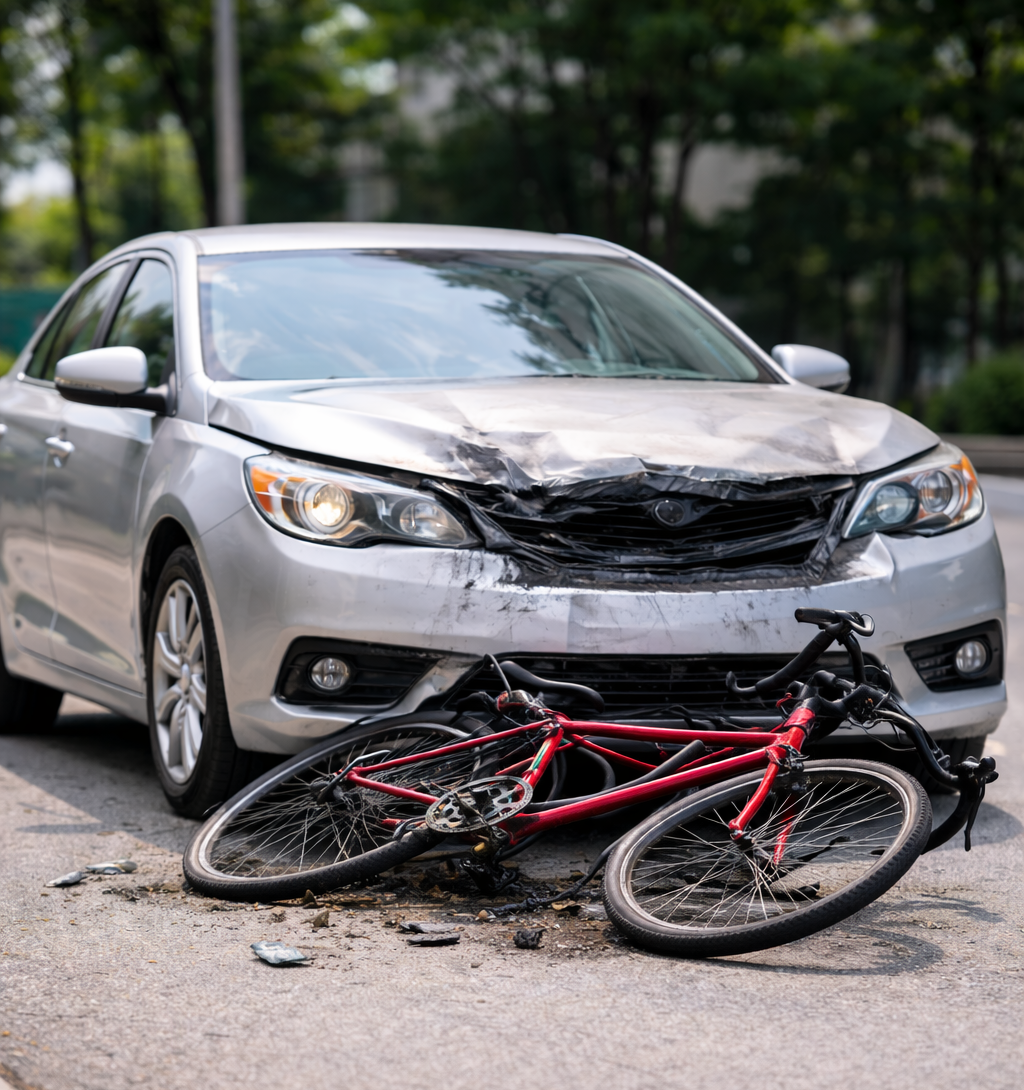
A rear-end bicycle collision occurs when a motorist strikes a cyclist from behind while both are traveling in the same direction. These incidents often occur in areas where cyclists and drivers share the road, such as marked bike lanes, narrow shoulders, and intersections.
In many cases, the driver fails to see the cyclist ahead or cannot stop in time to avoid impact. California law requires motorists to maintain a safe following distance and operate their vehicles with reasonable care around cyclists. When that duty is not met, the risk of a serious bicycle accident increases significantly.

Rear-end bicycle collisions often result in severe injuries. A motor vehicle approaches from behind, often at a higher speed, leaving little time for the driver to slow down or avoid the cyclist.
Cyclists have no structural protection, which means the full force of the impact is absorbed by the rider’s body. The vehicle’s momentum can propel the cyclist forward, sometimes into the roadway or into the path of other vehicles. Even at lower speeds, the lack of protection and sudden nature of the impact can cause harm.
Rear-end bicycle accidents are often preventable and typically result from negligent driver behavior or poor road conditions.
Drivers who focus on phones, navigation systems, or other distractions may not notice a cyclist riding in front of them until it is too late to stop.
Higher speeds reduce a driver’s ability to brake safely when approaching a cyclist. Even small increases in speed can significantly impact stopping distance and crash severity.
Following too closely behind a cyclist leaves drivers little room to respond if the rider slows or adjusts position to avoid road hazards.
Low-light conditions, sun glare, and weather-related visibility issues can make it harder for drivers to see cyclists.
Because bicycles do not offer cyclists structural protection in the same way as a larger vehicle, rear-end crashes can result in injuries such as:
These injuries often come with high medical costs, time away from work, and lasting impacts on a cyclist’s quality of life.
Determining fault in a rear-end bicycle accident requires a careful review of how the crash occurred, the actions of each party, and the applicable California traffic laws. In many cases, drivers have a duty to maintain a safe following distance and remain attentive to cyclists ahead. If they fail to do so, liability may be assigned to the driver, depending on the specific facts of the case.
In some cases, liability may be assigned to multiple parties. However, California follows a comparative negligence system, meaning individuals may still recover limited damages even if they are partially at fault. This compensation would be reduced by the individual’s percentage of fault. Evidence often plays an important role in this process, including police reports, photos of the scene, vehicle damage, skid marks, and any available video footage that helps establish what happened.
Bicycle Law aims to help injured cyclists in California gather and evaluate this evidence, identify responsible parties, and pursue compensation for losses such as medical bills, lost income, reduced earning capacity, and equipment damage so they can focus on recovery.
After a rear-end bicycle crash, insurance companies may move quickly to limit their financial exposure. Adjusters often look for ways to reduce or deny claims, including questioning how the crash occurred or the extent of a cyclist’s injuries.
Depending on the case, insurers may attempt to shift blame onto the cyclist. They might argue that the rider stopped suddenly, failed to use proper lighting or reflectors, or was not riding predictably. These arguments can often be used to reduce the value of a claim under California’s comparative negligence rules.
Bicycle Law’s goal is to manage these communications and confirm that claims are supported by sound evidence. Having legal representation can help protect against pressure to accept a settlement that does not reflect the full impact of the accident.
The moments after a rear-end bicycle accident can be confusing, but the steps you take may affect both your health and your ability to pursue a claim. Consider doing the following:
Rear-end bicycle crash cases often require a clear understanding of California traffic laws, including rules around safe following distances and a driver’s duty to remain aware of cyclists on the road. Building a strong claim also depends on gathering evidence, documenting injuries, and addressing the long-term impact of the crash.
There are important deadlines that apply to these cases, including California’s two-year statute of limitations for personal injury claims. Taking action early can help preserve evidence and protect your ability to move forward.
Bicycle Law focuses on representing injured cyclists and brings decades of experience handling personal injury and wrongful death matters across California. Our goal is to evaluate cyclist claims, manage communication with insurance companies, and pursue the compensation available under California law.
If you were injured in a rear-end bicycle accident in California, contact Bicycle Law today for a free consultation. We represent clients on a contingency fee basis, which means you do not pay attorney fees unless we successfully recover compensation for you. Our fee is typically a percentage of the recovery. In some cases, clients may be responsible for prevailing-party costs as determined by law.
Still have questions about your rear-end bicycle crash?
We’re happy to discuss your situation in more detail. Call us now at (866) 835-6529 or email us for a free initial consultation.