Failure to Check Blind Spots Before Making a Turn
Drivers may focus on vehicle traffic and overlook cyclists traveling in bike lanes or along the shoulder, especially when turning or merging.
When a driver fails to yield to a cyclist, the consequences can be immediate and severe. These accidents often happen in seconds, leaving little time to react or avoid impact. Working with a failure-to-yield accident lawyer from Bicycle Law can help you understand your legal options, protect your rights, and navigate communication with insurance companies after a bicycle crash.
These crashes occur when a driver fails to yield the right-of-way to a cyclist, resulting in a collision.
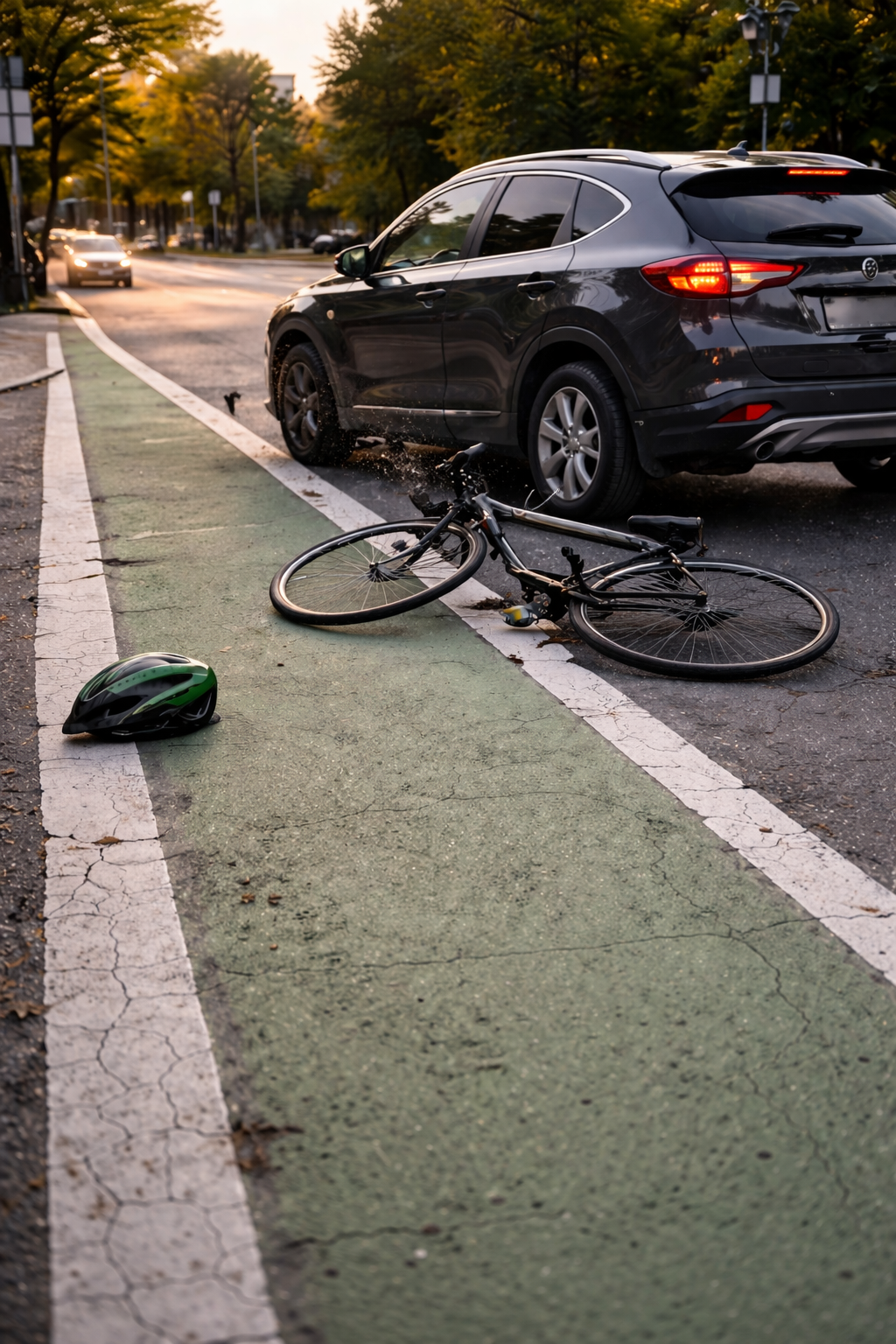
A failure-to-yield accident occurs when a driver fails to give the right-of-way to a cyclist when legally required, resulting in a collision or forcing the cyclist into a dangerous maneuver to avoid impact. For cyclists, these incidents often happen at intersections, driveways, or when vehicles enter or cross bike lanes.
Under California law, motorists have a duty to yield to cyclists in many common traffic situations, including when turning, merging, or entering a roadway. These rules are designed to protect cyclists who are lawfully traveling through intersections or along roadways.
Failure-to-yield accidents can take several forms. The following are some of the most common scenarios involving cyclists:

Failure-to-yield accidents often occur at intersections or while turning, exposing cyclists to direct impact. Without the protection of a vehicle frame, riders can experience serious physical trauma, even at lower speeds. Common injuries may include:
Medical documentation plays an important role after a bicycle accident. Records from emergency care, follow-up treatment, and rehabilitation can help establish the extent of injuries and their impact over time.
Failure-to-yield accidents involving cyclists are often tied to driver behavior at intersections or during lane changes. In many cases, these incidents occur because a motorist fails to properly check for a cyclist or misjudges the cyclist's speed and position on the road.
Drivers may focus on vehicle traffic and overlook cyclists traveling in bike lanes or along the shoulder, especially when turning or merging.
Phone use, navigation systems, or other distractions can divert a driver’s attention from the road, leading them to miss a cyclist with the right-of-way.
A driver may glance toward traffic but still fail to register a cyclist, especially at intersections where attention is divided.
Drivers who rush through intersections may fail to yield to cyclists already in the intersection, increasing the likelihood of a collision.
Establishing liability in a failure-to-yield bicycle accident in California often requires showing that a driver did not follow right-of-way laws and that this failure caused the crash. You may need evidence such as the following to prove your claim:
Insurance companies may attempt to argue that the cyclist contributed to the crash, especially in right-of-way disputes. Addressing these arguments often requires a detailed understanding of how traffic laws apply to cyclists and how fault is evaluated. Bicycle Law handles insurance negotiations so you can focus on recovery.
Cyclists injured in a failure-to-yield accident may be able to pursue both economic and non-economic damages for losses related to the crash. These damages can vary depending on the severity of injuries and who was at fault for the accident. Compensation may include:
The value of a claim depends on multiple factors, including the extent of injuries and the available evidence supporting liability.
The steps you take after a failure-to-yield accident in California can affect both your recovery and your ability to pursue a claim. Taking action early can help preserve important evidenace and create a clear record of what happened. If you are involved in a bicycle accident, consider the following steps:
Failure-to-yield bicycle accident cases in California often involve disputes over who had the right-of-way. While the circumstances may seem clear, drivers and insurance companies may still attempt to shift responsibility onto the cyclist. Having legal representation can help ensure that your side of the story is fully evaluated under California law.
Bicycle Law has over 2 decades of experience representing injured cyclists and handling personal injury claims across California. If you were involved in a failure-to-yield accident, contact Bicycle Law today for a free consultation.
We represent clients on a contingency fee basis. You do not pay attorney’s fees unless we successfully recover compensation for you. Our fee is typically a percentage of the recovery. In some cases, clients may be responsible for prevailing-party costs as determined by law.
Still have questions about your bicycle crash?
We’re happy to discuss your situation in more detail. Call us now at (866) 835-6529 or email us for a free initial consultation.