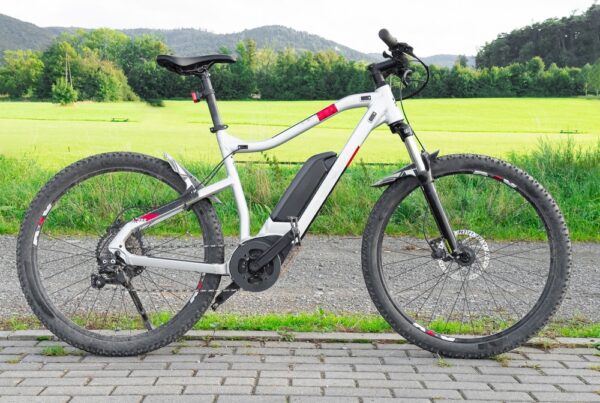
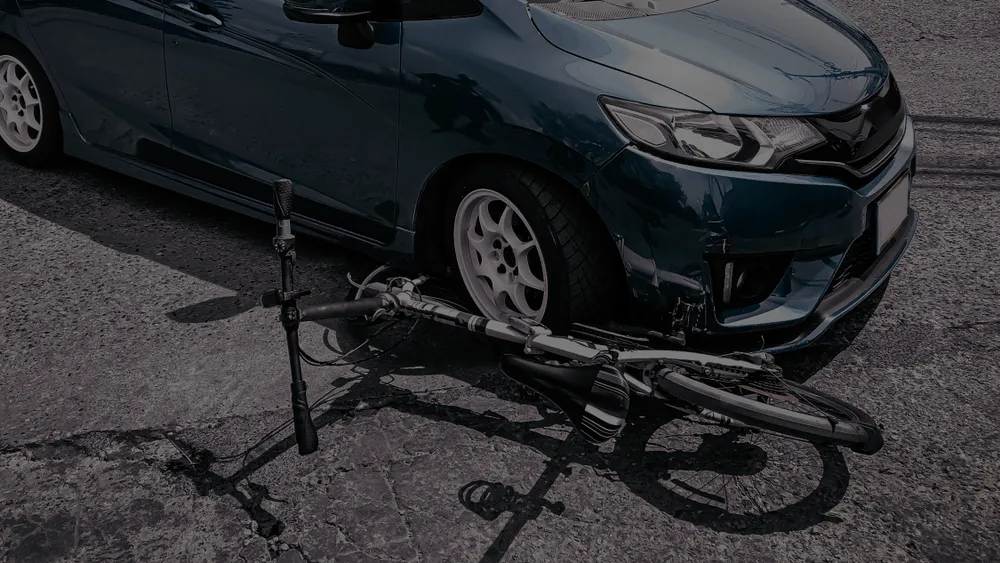
A collision between a bicycle and a passenger vehicle often leaves the cyclist with serious injuries. Unlike people inside a car, cyclists have little physical protection during an impact. Even at lower speeds, a bicycle accident can result in broken bones, traumatic brain injuries, spinal cord injuries, or other life-changing harm.
Cyclists and drivers alike have a duty to follow traffic laws and use reasonable care to help keep everyone on the road safe. Still, every collision is different, and determining legal responsibility depends on the specific facts and available evidence.
In this guide, we’ll examine common causes of bicycle-car collisions, how fault is determined, and how a California-based bicycle accident lawyer can help protect your rights.
How Often Do Bicycle–Car Crashes Happen? Key Statistics
Bicycle accidents involving motor vehicles happen far less often than passenger vehicle crashes, but the consequences for cyclists are often much more severe.
- Data from the National Highway Traffic Safety Administration (NHTSA) shows that 1,103 bicyclists were killed in U.S. traffic crashes in 2024.
- California recorded 145 bicyclist fatalities in 2023, the highest total of any state except Florida, according to the NHTSA.
- Bicyclists and pedestrians together account for about one in every six highway U.S. traffic fatalities, according to FHWA data.
- The Insurance Institute for Highway Safety (IIHS) reports that 66% of bicycle deaths in 2024 took place on major roads.
- Data from UC Berkeley shows that 3.6% of roadway fatalities in California in 2023 were cyclists, compared with 2.9% nationwide.
- UC Berkley also states that California and Texas alone accounted for 41.6% of all cyclist fatalities in 2023.
Typical Bicycle–Car Crash Scenarios
Most bicycle-car accidents in California follow a handful of recognizable patterns. While every collision is unique, drivers frequently bear responsibility when they fail to yield, make unsafe turns, or do not leave enough space for cyclists. While not every crash is caused by negligence, understanding the common scenarios below can help riders and drivers avoid some car-on-bike accidents.
| Crash Type | What Happens | Typical Fault |
| Right Hook | A driver passes a cyclist traveling in the same direction, then turns right across the cyclist’s path at an intersection or driveway. | The driver is often at fault for failing to yield before turning. |
| Left Cross | A driver turning left across traffic collides with an oncoming cyclist who is traveling straight through the intersection. | The turning driver is frequently responsible for failing to yield the right of way. |
| Rear-End Collision | A motorist strikes a cyclist traveling ahead in the same lane or on the shoulder. These crashes often involve distracted driving, speeding, or following too closely. | The driver is commonly at fault because motorists are expected to maintain a safe following distance and remain attentive. |
| Sideswipe Collision | A driver passes too closely or drifts into a bike lane, striking the cyclist without allowing enough clearance. | Liability often rests with the driver for making an unsafe passing maneuver or failing to stay within the travel lane. |
| Dooring | A person inside a parked vehicle opens a door into the path of an approaching cyclist, leaving little or no time to avoid a collision. | The person opening the door is often responsible if they failed to check for approaching cyclists before exiting the vehicle. |
| Pull-Out Collision | A driver enters a roadway from a driveway, parking lot, or side street and collides with a cyclist already traveling on the road. | The driver is often at fault for failing to yield before entering traffic. |
Determining Fault in a Bicycle vs. Car Accident
Determining responsibility in a bicycle-car accident starts with one central question: Did someone fail to use reasonable care? In California, this legal concept is known as negligence. A driver, cyclist, or even another party can be considered negligent if their actions or failure to act contributed to the collision.
Traffic laws play an important role in establishing liability. Drivers and cyclists are expected to follow the California Vehicle Code and exercise reasonable care while using the road. A traffic violation, such as running a red light, speeding, or making an unsafe lane change, can serve as strong evidence when determining fault. In some situations, violating a safety law may also support a finding of negligence because the law was intended to prevent the type of harm that occurred.
Drivers have a heightened responsibility because motor vehicles can cause significant harm to vulnerable road users. That includes checking for cyclists before turning, changing lanes, entering a roadway, or opening a vehicle door into traffic. Even when a cyclist is less visible than another vehicle, motorists are still expected to remain alert and watch for bicycles sharing the road.
However, cyclists also have legal duties. They are generally expected to obey traffic signals, ride in the same direction as traffic, use required lights and reflectors when riding at night, and follow other applicable traffic laws. If a cyclist violates one of these rules and that conduct contributes to the collision, it can affect the outcome of an injury claim.
Determining liability requires a careful review of the available evidence and the circumstances surrounding the collision. An experienced bicycle accident attorney can assess how California law applies to the evidence, identify all potentially liable parties, and pursue the compensation available under the state’s comparative negligence rules.
How California’s Comparative Negligence Rule Affects Liability
California follows a pure comparative negligence system. This means more than one person can share responsibility for the same bicycle accident. For example, if a driver turns left without yielding but the cyclist was traveling through the intersection after the traffic signal changed, a percentage of fault is assigned to each party. An injured cyclist can still pursue compensation, but their percentage of responsibility generally reduces any recovery.
In some cases, liability extends beyond the driver and cyclist. Other parties that may share responsibility include:
- An employer if the at-fault driver was acting within the scope of their employment.
- A vehicle or bicycle manufacturer if a defective component contributed to the collision.
- A government entity responsible for designing or maintaining an unsafe roadway, intersection, or bike lane.
Evidence You May Need to Prove Fault
The strength of a bicycle accident claim often depends on the available evidence. The more documentation there is to show how the collision occurred and the injuries it caused, the easier it is to establish liability and pursue compensation. Collecting and preserving evidence as early as possible can make a significant difference, especially if facts are disputed or insurance companies question what occurred.
Key evidence often includes:
- Police reports and citations: Responding officers typically document the crash scene, identify the parties involved, record witness information, and note any traffic citations or apparent traffic law violations. While a police report does not determine fault on its own, it can provide valuable information during an insurance claim or lawsuit.
- Video and digital footage: Dashcams, helmet cameras, traffic cameras, security cameras, and even nearby doorbell cameras can capture the moments leading up to a collision. This footage can help clarify vehicle speeds, traffic signals, lane positions, and other important details that witness memories alone cannot always establish.
- Physical evidence from the scene: Damage to the bicycle and vehicle, skid marks, debris, paint transfers, road conditions, and the final resting positions of the parties can help reconstruct how the collision occurred. In complex cases, accident reconstruction professionals may analyze this evidence to explain the sequence of events.
- Eyewitness statements: People who saw the collision can provide independent accounts of what happened before, during, and after the impact. Their observations can help confirm details about traffic signals, driver behavior, cyclist positioning, or other disputed facts.
- Medical records: Emergency room records, diagnostic imaging, physician notes, and ongoing treatment records connect your injuries to the bicycle accident. These documents also help demonstrate the severity of the injuries and the medical care required during recovery.
An attorney can help identify, preserve, and obtain important evidence before it is lost, helping build the strongest possible claim.
Protecting Your Health and Legal Rights After a Bicycle–Car Crash
A bicycle accident can affect nearly every part of your life. Along with the physical pain of recovering from serious injuries, many cyclists face hospital bills, rehabilitation expenses, lost income, damage to their bicycle and gear, and uncertainty about what comes next. Insurance companies sometimes attempt to minimize injuries or argue that the cyclist was partially responsible for the collision, making it even more important to have legal guidance.
Bicycle Law helps injured California cyclists pursue compensation after a bicycle crash. Our team works to investigate the collision, gather evidence, communicate with insurance companies, and seek recovery for applicable losses. Every case is unique, and we strive to take the time to evaluate the specific facts and explain your legal options.
If you were injured in a bicycle-car accident in California, contact Bicycle Law today for a free consultation. We work exclusively on a contingency fee basis for injury cases, so you pay no attorney fees or costs unless we recover compensation for you.