
Class 3 e-bikes are becoming a more common sight on California roads, bike lanes, and shared paths. Their ability to travel at higher speeds can make commuting and longer rides more practical, but it also raises important questions about where they can legally operate.
This guide explains how speed, throttle use, and local restrictions apply to Class 3 e-bikes, helping riders make informed decisions before heading out.
What Is a Class 3 E-Bike?
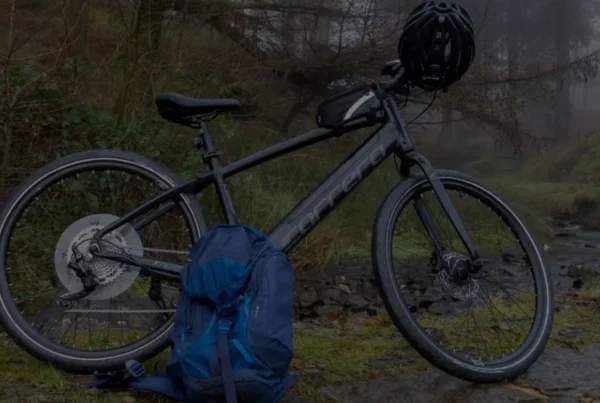
A Class 3 e-bike is a motor-assisted bicycle that provides power only while the rider is pedaling. Its pedal-assist motor stops assisting once the bike reaches 28 mph. In general, a Class 3 e-bike must have a motor rated at no more than 750 watts and an integrated speedometer. Active pedaling is required for the motor to assist at its highest permitted speed. Federal product standards and state laws do not always use identical definitions, so riders should also check the rules that apply where they plan to ride.
How Fast Does a Class 3 E-Bike Go?
A Class 3 e-bike helps you pedal until you reach 28 mph. At that point, the electric motor shuts off. You can still ride faster than 28 mph if you pedal hard or go downhill. The e-bike simply stops giving you an extra boost once you reach that speed.
Do Class 3 E-Bikes Have a Throttle?
For an e-bike to be categorized as Class 3, it typically cannot have a throttle that can propel the bike without pedaling. A bike with a throttle may fall into a different classification under state law.
However, some states allow an e-bike to have a throttle that provides power up to 20 mph while allowing pedal assistance up to 28 mph. Rules vary by state and local jurisdiction, so confirm the bike’s classification and throttle settings before riding.
How Class 3 Compares to Class 1 and Class 2 E-Bikes
The three e-bike system classes distinguish e-bikes by how their motors work and how fast they provide assistance. Class 1, Class 2, and Class 3 e-bikes can all look similar, but their speed limits and throttle features often affect where they can be ridden.
| E-bike class | Assist type | Top assisted speed | Throttle | Motor limit | Typical use |
| Class 1 e-bike | Pedal assist only | 20 mph | No | Up to 750 watts | Bike paths, shared-use paths, recreational riding, and everyday trips |
| Class 2 e-bike | Pedal assist and throttle | 20 mph | Yes | Up to 750 watts | Local trips and commuting, subject to added trail and path restrictions |
| Class 3 e-bike | Usually pedal assist only | 28 mph | Usually no | Up to 750 watts | Road commuting and riding alongside urban traffic |
Altering an e-bike, such as increasing its speed capability or altering its throttle, can change where it is legal to ride. In some situations, a modified e-bike may no longer be treated as an e-bike under applicable law and could instead be regulated as a motor vehicle.
Where You Can Legally Ride a Class 3 E-Bike
Class 3 e-bikes are generally permitted on public roads and painted bike lanes where cyclists travel alongside vehicle traffic. Their higher assisted speed can make them a practical commuting option, but it can also limit access to places designed primarily for pedestrians or slower-moving cyclists.
| Riding location | Typical rule for Class 3 e-bikes |
| Public roads | Generally allowed |
| Painted on-street bike lanes | Generally allowed |
| Protected bike lanes | Often allowed, but local rules can apply |
| Shared-use paths | Often restricted unless local rules specifically allow Class 3 e-bikes |
| Rail-trails | Often restricted unless the trail operator or local rules allow them |
| Sidewalks | Usually prohibited or heavily restricted |
| Singletrack mountain bike trails | Often prohibited |
| Nonmotorized trails | Often prohibited, although some may allow Class 1 e-bikes |
Shared-use paths and rail-trails often restrict Class 3 e-bikes. California, for example, generally does not allow Class 3 e-bikes on bicycle paths, trails, or other multipurpose paths unless a local authority permits their use.
Rules can vary significantly by city, county, park district, and trail operator. Check posted signs, municipal codes, and park rules before riding a Class 3 e-bike.
Other Class 3 E-Bike Rules: Age Limits, Helmets, Licensing, and Registration
Class 3 e-bike rules are not limited to speed and riding locations. Riders should also understand requirements that may apply to their age, helmet use, and the bike’s label before riding on public roads.
- Age requirements: Some states require Class 3 riders to be at least 15 or 16 years old. California and Oregon, for example, generally require riders to be at least 16 to operate a Class 3 e-bike. Younger riders may be limited to Class 1 or Class 2 e-bikes, depending on state law.
- Helmet requirements: Many states require every Class 3 rider to wear a helmet, not only riders under 18. A helmet that meets the NTA 8776 standard is designed for higher-speed e-bike riding, while MIPS technology is designed to help reduce certain rotational forces during an impact. These features are safety considerations, not universal legal requirements.
- E-bike labels: States that use the three-class e-bike system often require a permanent label showing the bike’s class, top assisted speed, and motor wattage. The label helps riders, law enforcement, and trail operators identify the rules that apply to the e-bike.
- License, registration, and insurance: A compliant Class 3 e-bike generally does not require a driver’s license, registration, or insurance in states that recognize the three-class system. California, for instance, does not treat a compliant electric bicycle as a motor vehicle for those purposes.
A faster e-bike can be treated differently in states that do not recognize the three-class system. North Carolina, for example, has historically defined an electric-assisted bicycle around a 20 mph motor-powered limit, so a faster bike may require a separate analysis under the state’s moped or motor vehicle laws.
Involved in an E-Bike Crash? Talk to an Attorney Today
A Class 3 e-bike’s speed and legal classification can become important after a collision. Drivers may fail to yield because they misjudge an e-bike rider’s speed, and disputes can arise over lane access, right of way, or where the rider was permitted to travel. Insurance companies may also question an e-bike’s classification in an effort to limit or deny a claim.
Bicycle Law handles e-bike injury cases across California and Oregon. Our legal team can review the circumstances of the crash, help identify relevant evidence, and explain the legal options that may be available.
If you were injured while riding an e-bike, report your crash to Bicycle Law for a free case evaluation. We work on a contingency fee basis, so you pay no attorney fees or costs unless we recover compensation for you.
FAQs About Class 3 E-Bikes
Do you need a driver’s license or registration for a Class 3 e-bike?
No, you usually do not need a driver’s license or registration for a Class 3 e-bike, as long as the e-bike meets the state’s Class 3 definition. States without a three-class e-bike system may treat a 28 mph e-bike differently, so check local requirements before riding.
Do you need insurance to ride a Class 3 e-bike?
No, most states do not require insurance for a compliant Class 3 e-bike. However, e-bike insurance can help protect against theft, property damage, or certain crash-related expenses.
Can you modify a Class 1 or Class 2 e-bike into a Class 3?
Yes, but changing an e-bike’s speed or motor settings can affect its legal classification. Any modified bike must still meet applicable Class 3 requirements, including its speed limit, motor limit, and labeling rules, or it could be treated as a motor vehicle instead.