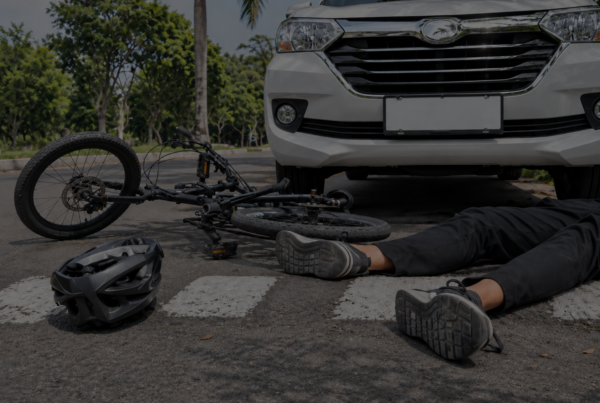
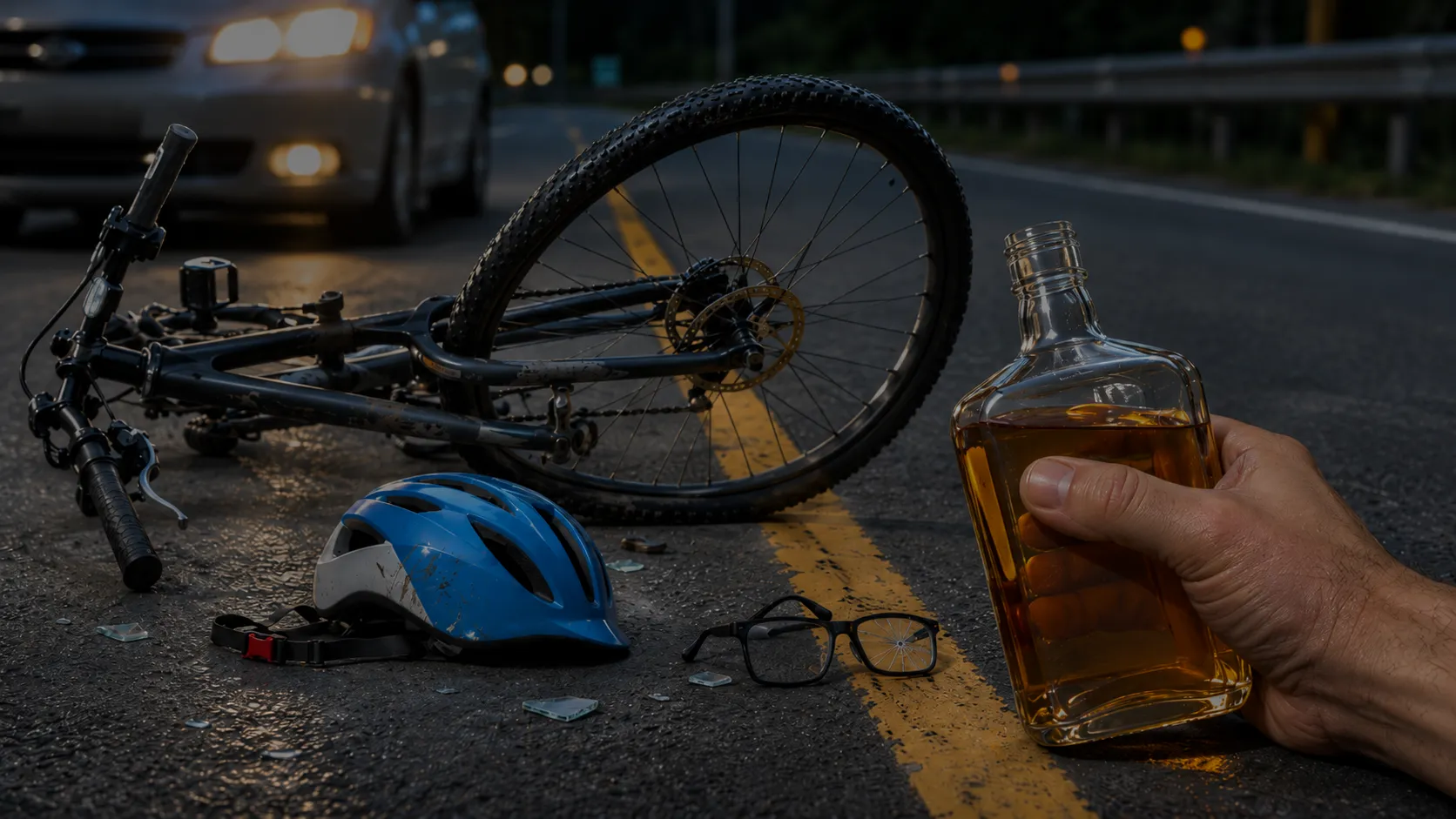
After a night out, riding your bike home can seem like a safer alternative to getting behind the wheel. However, cycling while intoxicated can carry legal consequences, and the answer to whether it can lead to a DUI depends on your state and the type of bike you are riding.
Some states allow full DUI charges on traditional bicycles, while others use bike-specific offenses or limit DUI laws to motor vehicles. E-bikes may be subject to stricter rules because they are often treated more like motor vehicles than pedal-only bikes.
This guide breaks down cycling-under-the-influence laws by state and explains how the rules may change for e-bike riders.
States Where Riding a Bike Drunk Is a DUI
Riding a pedal bicycle while intoxicated can trigger a standard DUI or DWI charge in:
- Alabama
- Florida
- Maryland
- North Carolina
- Ohio
- Pennsylvania
- Washington D.C.
In these jurisdictions, the impaired-driving statute applies to a “vehicle,” and the applicable code or court decisions treat a bicycle as a vehicle for that purpose. A DUI or DWI charge may result in a misdemeanor conviction, fines, probation, alcohol education or assessment requirements, and possible jail time.
Driver’s license consequences vary by jurisdiction and may depend on the statute, the rider’s record, and the facts of the case. Florida, North Carolina, Ohio, and Pennsylvania, for example, may impose license-related consequences under their impaired-driving laws.
States with Specific Cycling Under the Influence Laws
A few states address impaired cycling through laws written specifically for bicycles instead of applying their standard motor vehicle DUI statutes. These offenses can still lead to fines and, in some cases, jail time, but they generally do not carry the same driver’s license consequences as a motor vehicle DUI.
- California: Vehicle Code § 21200.5 makes it unlawful to ride a bicycle on a highway while under the influence of alcohol or drugs. A conviction can result in a fine of up to $250. This is a bicycle-specific offense rather than a standard DUI conviction, so it generally does not trigger a driver’s license suspension, although riders under 21 may face separate DMV consequences.
- Delaware: Delaware Code § 4198J prohibits riding a bicycle on a state highway while under the influence to a degree that makes the rider a hazard. A first offense carries a fine of $150 to $1,150. Subsequent offenses can lead to higher fines, possible jail time, or both, but the law expressly states that the violation cannot be entered on the rider’s motor vehicle record.
- New York: Vehicle and Traffic Law § 1242-a creates a separate impaired-operation offense for e-bikes. Alcohol impairment can be charged as a traffic infraction, while intoxication, drug impairment, or combined alcohol and drug impairment can be charged as a misdemeanor. The statute applies only in connection with a crash involving the e-bike rider.
States Where Bike DUIs Do Not Apply
Most states limit standard DUI or DWI charges to the operation of a motor vehicle. A traditional, pedal-only bicycle is not a motor vehicle, so a rider generally cannot be charged under the state’s regular impaired-driving statute. However, that distinction does not make impaired riding legal or safe, since other traffic and criminal laws may still apply.
Examples of states where bike DUIs or similar charges do not apply include:
- Washington: Washington’s standard DUI statute applies to a person driving a vehicle, but the state does not prosecute traditional bicycle riders under that law. Instead, RCW 46.61.790 permits an officer to offer an apparently intoxicated rider transportation to a safe place and temporarily impound the bicycle when necessary to reduce a public-safety risk.
- Colorado: Colorado’s DUI and DWAI laws apply to motor vehicles, not traditional bicycles. An impaired cyclist can still face other consequences if their conduct creates a traffic hazard or violates another law.
- Georgia: Georgia excludes devices moved by human power from its definition of a vehicle for DUI purposes. A rider who creates a danger while impaired may still face charges such as public intoxication, disorderly conduct, or another applicable offense.
- Texas: Texas limits standard DWI charges to people operating a motor vehicle, so a traditional bicycle rider cannot be charged with DWI under that statute. Public intoxication, reckless conduct, traffic violations, or local offenses may still apply if an impaired cyclist poses a danger to themselves or others.
- Illinois: Illinois excludes human-powered bicycles from the definition of a vehicle used in its DUI statute. An impaired rider may still face charges or citations for reckless conduct, public intoxication, or other violations based on the circumstances.
How Electric Bikes Impact DUI Laws
An electric motor can change how a state treats a bike, but an e-bike is not automatically a motor vehicle for DUI purposes. Many states treat a properly classified low-speed e-bike as a bicycle, while others create separate impaired-operation rules or classify higher-powered devices as mopeds or motorcycles.
Most states that use a three-class system define e-bikes this way:
- Class 1: Pedal-assist only, with motor assistance ending at 20 mph.
- Class 2: Throttle-capable, with motor assistance ending at 20 mph.
- Class 3: Pedal-assist only, with motor assistance ending at 28 mph.
The class label alone does not determine whether a DUI law applies. A compliant Class 1, 2, or 3 e-bike may still be treated as a bicycle under a state’s traffic code.
Risk often increases when a device exceeds the state’s e-bike limits for motor wattage, speed, throttle operation, or required pedals. A modified or higher-powered e-bike may be treated as a moped, motor-driven cycle, or motorcycle. Once that happens, standard motor vehicle DUI or DWI laws can apply, even in a state that exempts traditional pedal bicycles.
Cycling Under the Influence Laws in All 50 States
This table summarizes statewide DUI, DWI, and similar rules for traditional pedal bicycles. E-bike treatment can differ by class, motor output, speed capability, and state definition. Alternative charges are fact-specific and can include public intoxication, disorderly conduct, reckless conduct, or traffic offenses when an impaired rider creates a hazard.
| State | DUI Status | Governing Statute | Penalties & Legal Impact |
|---|---|---|---|
| Alabama | Full DUI applies | Ala. Code § 32-5A-191 | Standard DUI penalties can apply, including criminal penalties and license consequences. |
| Alaska | No bike DUI | AS § 28.35.030 | DUI applies to motor vehicles. Other public-safety or disorderly-conduct laws may apply. |
| Arizona | No bike DUI | A.R.S. § 28-1381 | The vehicle definition excludes human-powered devices. |
| Arkansas | No bike DUI | Ark. Code § 5-65-103 | DWI applies to motor vehicles, not traditional bicycles. |
| California | Dedicated bike law | Cal. Veh. Code § 21200.5 | Riding a bicycle while impaired is punishable by a fine of up to $250, separate from a standard DUI. |
| Colorado | No bike DUI | Colo. Rev. Stat. § 42-4-1301 | DUI and DWAI apply to motor vehicles. Other charges or citations may apply based on conduct. |
| Connecticut | No bike DUI | Conn. Gen. Stat. § 14-227a | OUI applies to motor vehicles, excluding traditional bicycles. |
| Delaware | Dedicated bike law | 21 Del. C. § 4198J | First offense carries a $150 to $1,150 fine. The violation is not entered on a motor vehicle record. |
| District of Columbia | Full DUI applies | D.C. Code § 50-2206.11 | A bicycle can qualify as a vehicle under D.C. law, allowing standard DUI penalties. |
| Florida | Full DUI applies | Fla. Stat. § 316.193 | Standard DUI penalties can apply, including fines, probation, and possible license consequences. |
| Georgia | No bike DUI | O.C.G.A. § 40-6-391 | Human-powered devices are excluded for DUI purposes. Other offenses may apply. |
| Hawaii | Full DUI applies | Haw. Rev. Stat. § 291E-61 | Bicycles are included in the relevant vehicle definition, so standard DUI penalties may apply. |
| Idaho | No bike DUI | Idaho Code § 18-8004 | DUI applies to motor vehicles. |
| Illinois | No bike DUI | 625 ILCS 5/11-501 | Human-powered bicycles are excluded from the DUI vehicle definition. |
| Indiana | Full DUI applies | Ind. Code § 9-30-5-2 | Standard OWI penalties may apply to a bicycle rider. |
| Iowa | No bike DUI | Iowa Code § 321J.2 | OWI applies to motor vehicles. Public intoxication or related offenses may still apply. |
| Kansas | No bike DUI | Kan. Stat. § 8-1567 | Kansas courts have held that a traditional bicycle is not a vehicle for DUI purposes. |
| Kentucky | No bike DUI | Ky. Rev. Stat. § 189A.010 | DUI applies to motor vehicles, not traditional bicycles. |
| Louisiana | No bike DUI | La. R.S. § 14:98 | Standard DWI does not apply to an ordinary bicycle rider. |
| Maine | No bike DUI | 29-A M.R.S. § 2411 | OUI applies to motor vehicles. |
| Maryland | Full DUI applies | Md. Code, Transp. § 21-902 | A bicycle rider can face impaired-driving charges under the state’s vehicle law. |
| Massachusetts | No bike DUI | Mass. Gen. Laws ch. 90, § 24 | OUI applies to motor vehicles. |
| Michigan | No bike DUI | Mich. Comp. Laws § 257.625 | The vehicle definition excludes devices moved exclusively by human power. |
| Minnesota | No bike DUI | Minn. Stat. § 169A.20 | DWI applies to motor vehicles. |
| Mississippi | Full DUI applies | Miss. Code § 63-11-30 | Standard DUI penalties may apply because bicycle riders are generally subject to vehicle-operator duties. |
| Missouri | No bike DUI | Mo. Rev. Stat. § 577.010 | DWI applies to motor vehicles. |
| Montana | No bike DUI | Mont. Code Ann. § 61-8-1002 | Traditional bicycles are outside the standard DUI framework. |
| Nebraska | No bike DUI | Neb. Rev. Stat. § 60-6,196 | DUI applies to motor vehicles. |
| Nevada | No bike DUI | Nev. Rev. Stat. § 484C.110 | Traditional bicycles are generally outside the state’s DUI enforcement framework. |
| New Hampshire | No bike DUI | N.H. Rev. Stat. § 265-A:2 | Standard DWI does not apply to a traditional bicycle. |
| New Jersey | No bike DUI | N.J. Stat. § 39:4-50 | DWI applies to motor vehicles, and courts have excluded pedal bicycles. |
| New Mexico | No bike DUI | N.M. Stat. § 66-8-102 | The vehicle definition excludes devices propelled exclusively by human power. |
| New York | No pedal-bike DWI; dedicated e-bike law | N.Y. Veh. & Traf. Law §§ 1192, 1242-a | Traditional bikes are outside DWI. E-bike impaired operation has a separate law that applies in connection with a crash. |
| North Carolina | Full DWI applies | N.C. Gen. Stat. § 20-138.1 | Bicycles are deemed vehicles for this chapter, so standard DWI penalties may apply. |
| North Dakota | No standard bike DUI, with an exception | N.D. Cent. Code § 39-08-01 | Ordinary bicycles are generally outside DUI enforcement, but the driver of a multi-passenger bicycle can be charged. |
| Ohio | Full OVI applies | Ohio Rev. Code § 4511.19 | Ohio expressly includes bicycles and electric bicycles in its vehicle definition. |
| Oklahoma | No bike DUI | Okla. Stat. tit. 47, § 11-902 | DUI applies to motor vehicles. |
| Oregon | Full DUII applies | Or. Rev. Stat. §§ 813.010, 814.400 | Oregon treats a bicycle as a vehicle for vehicle-code purposes. Standard DUII consequences may apply. |
| Pennsylvania | Full DUI applies | 75 Pa. Cons. Stat. § 3802 | Standard DUI penalties may apply to a bicycle rider, including potential criminal and license consequences. |
| Rhode Island | Full DUI applies | R.I. Gen. Laws § 31-27-2 | Bicycle riders are subject to the DUI statute’s vehicle-based rules. |
| South Carolina | No bike DUI | S.C. Code § 56-5-2930 | DUI applies to motor vehicles. |
| South Dakota | No bike DUI | S.D. Codified Laws § 32-23-1 | Human-powered bicycles are excluded from the relevant vehicle definition. |
| Tennessee | No bike DUI | Tenn. Code § 55-10-401 | DUI applies to motor-driven vehicles. |
| Texas | No bike DWI | Tex. Penal Code § 49.04 | DWI applies to motor vehicles. Public intoxication or another charge may still apply. |
| Utah | Full DUI applies | Utah Code § 41-6a-502 | Standard DUI penalties may apply because bicycle riders are generally subject to vehicle-operator rules. |
| Vermont | No bike DUI | 23 V.S.A. § 1201 | Vermont case law excludes traditional bicycles from the DUI statute. |
| Virginia | No bike DUI | Va. Code § 18.2-266 | DUI applies to motor vehicles, not ordinary bicycles. |
| Washington | No bike DUI | Wash. Rev. Code §§ 46.61.502, 46.61.790 | Officers may offer safe transportation and temporarily impound a bicycle for public safety. |
| West Virginia | No bike DUI | W. Va. Code § 17C-5-2 | The vehicle definition excludes devices moved exclusively by human power. |
| Wisconsin | No bike OWI | Wis. Stat. § 346.63 | OWI applies to motor vehicles. |
| Wyoming | No bike DUI | Wyo. Stat. § 31-5-233 | The vehicle definition excludes devices moved exclusively by human power. |
Call a Bicycle Lawyer After a Bike DUI or Crash
Cycling-under-the-influence laws vary widely, but alcohol or drug impairment can create serious safety risks in every state. A crash involving an impaired cyclist, driver, or e-bike rider can quickly raise questions about fault, insurance coverage, and the rules that apply.
Bicycle Law represents injured cyclists and e-bike riders in California. If you were injured in a crash, contact Bicycle Law for a free consultation. We work on a contingency fee basis. You pay no attorney fees or costs unless we recover compensation for you.
FAQs About DUI While Biking
What is the legal BAC limit for riding a bicycle?
In states that apply their standard DUI or DWI laws to bicycles, the usual legal limit is 0.08% BAC. State law can differ, and bicycle-specific laws may not use a set BAC limit at all. Utah, for example, has a lower BAC threshold for DUIs of 0.05%.
Can riding a bike drunk affect your driver's license?
Yes, in some cases. It depends on the state and the charge. A conviction under a standard DUI or DWI statute can affect a driver’s license even when the incident involved a bicycle, while a bicycle-specific violation may not carry the same license consequences.
What is the difference between a DUI, BUI, and CUI?
DUI generally refers to driving under the influence under a state’s standard impaired-driving law. BUI and CUI are terms commonly used for bicycle-specific impaired-riding offenses, though the exact name and legal effect vary by state.
Can the police give you a breathalyzer on a bicycle?
Yes, an officer can request field sobriety testing or a breath test when they suspect impairment. The consequences of refusing a test, including any implied-consent or driver’s license consequences, depend on the state and the statute involved.