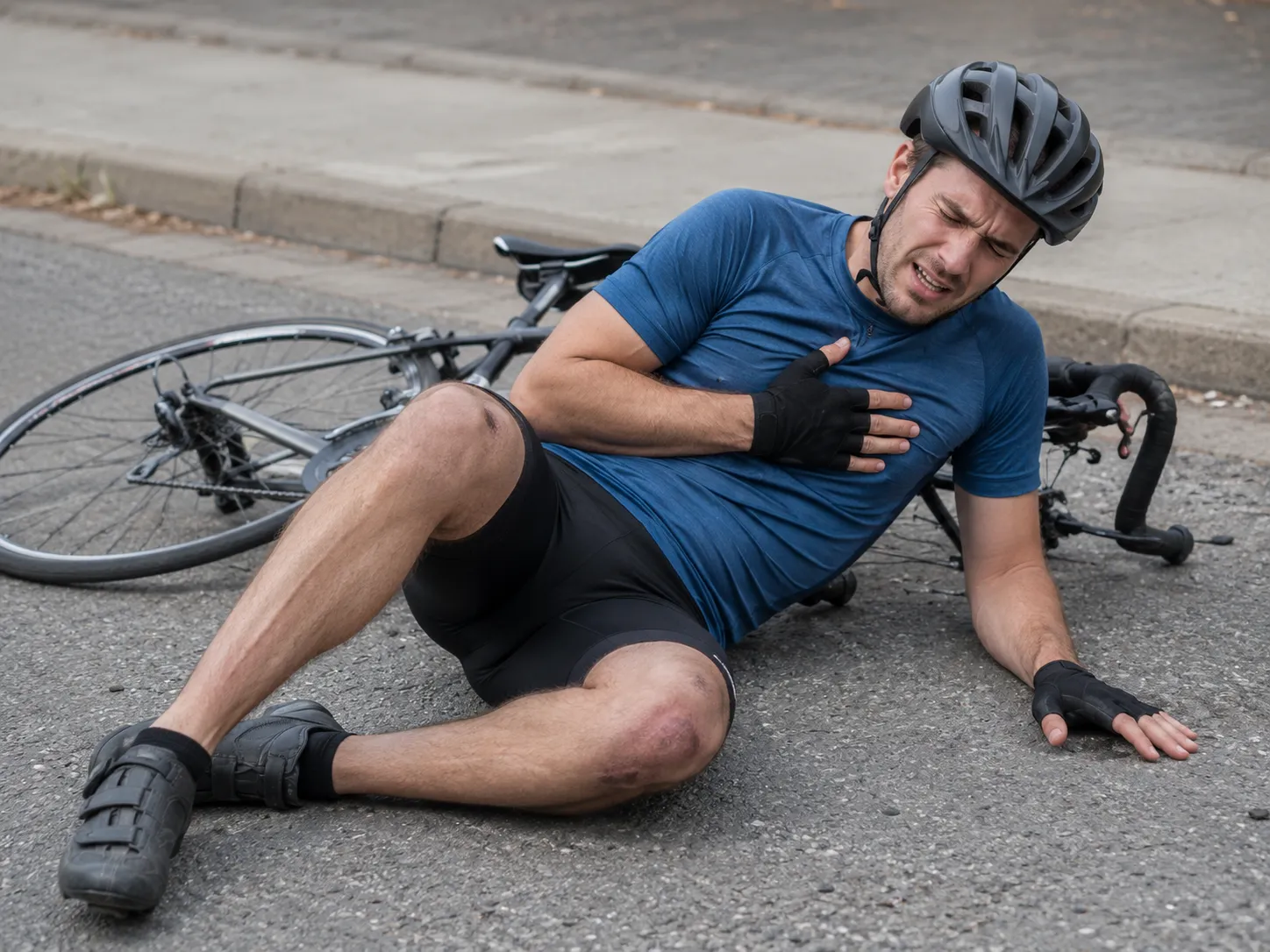
A bicycle chest injury occurs when a rider suffers trauma to the chest during a bicycle accident. This can happen when a cyclist is thrown over the handlebars, struck by a vehicle, or lands on the pavement. Because cyclists have little protection in a collision, even seemingly minor chest injuries can be more serious than they first appear.
A chest injury may range from a bruise to rib fractures and lung injuries. In some cases, symptoms do not develop immediately and may worsen in the hours after an accident. Understanding the signs of a serious injury can help cyclists seek appropriate medical care when needed.
This guide explains common types of bicycle chest injuries, symptoms to watch for, treatment and recovery considerations, and legal issues that may arise after a bicycle accident.
Common Bicycle Chest Injuries and How They Happen
While some bicycle accident injuries are relatively minor, others can affect a rider’s ability to breathe or may indicate internal trauma. The type of chest injury often depends on how the bicycle accident occurred, including whether the cyclist collided with a motor vehicle and how the cyclist landed. Common chest injuries include:
- Chest contusion (bruised chest): A chest contusion occurs when blunt force damages soft tissue in the chest. It commonly happens when a cyclist strikes the handlebars, the ground, or another object during a fall. Pain, tenderness, and swelling are common symptoms.
- Rib fractures: Broken ribs are among the most common injuries after a bicycle accident. They often occur when a rider lands on their side or chest, or when the chest absorbs the force of a collision. While many rib fractures heal with time, multiple broken ribs can create more serious complications.
- Flail chest: Flail chest occurs when several adjacent ribs break in multiple places, causing part of the chest wall to move abnormally during breathing. This injury typically results from high-impact crashes and can significantly affect breathing.
- Fractured sternum: The sternum, or breastbone, can fracture when a cyclist’s chest strikes the handlebars, a vehicle, or another hard surface. These injuries can be painful and may occur alongside injuries to the heart or lungs.
- Collarbone fractures: A broken collarbone often occurs when a rider falls onto a shoulder or outstretched arm. Although technically a shoulder injury, collarbone fractures frequently accompany chest trauma in bicycle accidents.
- Pulmonary contusion (bruised lung): A pulmonary contusion occurs when blunt force bruises lung tissue. This injury may not be immediately obvious, but it can interfere with breathing and oxygen exchange as symptoms develop.
- Pneumothorax (collapsed lung): A broken rib or significant chest trauma can allow air to collect around the lung, causing it to partially or completely collapse. A pneumothorax often requires urgent medical treatment.
- Myocardial contusion (bruised heart): A forceful impact to the chest can bruise the heart muscle. Although less common, this injury may affect heart function and should be evaluated promptly.
In some bicycle accidents, multiple injuries occur simultaneously. For example, a rider may suffer rib fractures along with a pulmonary contusion or pneumothorax. Because internal injuries are not always visible immediately after a crash, any chest pain, difficulty breathing, or suspected internal injury should be evaluated by a medical professional as soon as possible.
How Cycling Accidents Cause Severe Torso Trauma
The force of a bicycle crash can place tremendous stress on the entire torso. When a rider is thrown over the handlebars, struck by a vehicle, or lands hard on the pavement, the torso often absorbs much of the impact. Common mechanisms of torso injuries include:
- Handlebar impact: When a bicycle stops suddenly, the rider’s body often continues moving forward, forcing the torso into the handlebars. Because the handlebars concentrate significant force into a small area, these impacts can cause rib or sternum fractures, chest contusions, and internal injuries to organs in the upper abdomen, including the liver and spleen.
- Ground impact: Cyclists who are thrown from their bicycles may land directly on their side, chest, abdomen, or shoulder. The force of striking pavement or another hard surface can result in broken ribs, bruised lungs, abdominal organ injuries, and other serious torso trauma.
- Motor vehicle collisions: A cyclist involved in a collision with a car may experience multiple impacts during the same accident. The torso may strike the vehicle itself, followed by a secondary impact with the roadway. These crashes are more likely to cause severe injuries, including multiple rib fractures, pulmonary contusions, pneumothorax, and other internal trauma.
- Combined impact injuries: Many serious bicycle accidents involve more than one mechanism of injury. A rider may strike the handlebars, collide with a vehicle, and then hit the pavement within seconds. Multiple impacts can increase the likelihood of significant torso trauma and injuries affecting breathing or circulation.
Warning Signs Your Bike Chest Injury Is an Emergency
Although chest pain isn’t necessarily uncommon after a bicycle accident, some symptoms may indicate a serious injury involving the ribs, lungs, heart, or major blood vessels. Knowing them can help you decide when to seek immediate medical attention.
Some chest injuries become more serious over time. A bruised lung, internal bleeding, or a small pneumothorax may not cause severe symptoms immediately after a crash. If symptoms worsen in the hours following an accident, seek medical attention promptly.
Children, older adults, and people with existing heart or lung conditions may be more vulnerable to complications from chest trauma, even when the initial injury appears relatively minor.
Below are some general guidelines for seeking medical treatment after a bicycle chest injury.
Call 911 Immediately if You Have:
- Severe shortness of breath or a feeling that you cannot get enough air
- Rapid, labored, or worsening breathing
- Chest pain that becomes significantly worse when breathing, coughing, or moving
- A chest wall that appears deformed or does not rise evenly when you breathe
- Signs of a collapsed lung, such as sudden breathing difficulty after a crash
- Coughing up blood
- Dizziness, fainting, confusion, or loss of consciousness
- Blue or gray discoloration of the lips, face, or fingertips
- Severe chest trauma following a high-speed bicycle accident
Get Evaluated at an Emergency Room Promptly if You Have:
- Significant rib pain that makes it difficult to take a deep breath
- A grinding, popping, or crackling sensation in the ribs (crepitus)
- Visible bruising or swelling across the chest
- Persistent chest pain that is not improving
- Suspected rib fractures, sternum fractures, or other chest injuries
- A feeling of “air hunger” or difficulty taking a full breath, even if symptoms seem mild
Contact a Doctor Within 24 Hours if You Have:
- Mild to moderate chest pain that is manageable but not improving
- Bruising or tenderness that continues to worsen
- Pain that interferes with normal movement, sleep, or daily activities
- Concerns about a chest injury after a bicycle accident, even if symptoms initially seemed minor
Treatment, Recovery, and Complications of Bicycle Chest Injuries
The treatment and recovery process depends on the type and severity of the chest injury. While some cyclists recover with conservative care, others may require hospitalization and ongoing rehabilitation.
After a bicycle accident, doctors typically begin with a physical examination and imaging studies to identify fractures, internal bleeding, lung injuries, or other complications. This can include X-rays, CT scans, ultrasounds, bloodwork, and cardiac monitoring.
Once testing is complete, doctors decide on a course of treatment. For instance:
- Minor chest contusions and uncomplicated rib fractures are often treated with pain management, activity restrictions, breathing exercises, and follow-up care.
- Pulmonary contusions, pneumothorax, and other internal injuries may require hospitalization and close monitoring.
- Severe injuries, including flail chest or significant lung trauma, may require surgical stabilization, chest tubes to help re-expand a collapsed lung, ventilator support, or other emergency treatments.
From there, recovery timelines generally vary based on the extent of the chest injury and the cyclist’s overall health. For example, simple rib fractures often take 6 to 8 weeks to heal, while more serious injuries involving the lungs, heart, or other internal organs may require several months of recovery and rehabilitation.
Keep in mind that returning to cycling too soon may increase the risk of re-injury or delayed healing. Always follow your medical provider’s recommendations regarding activity levels.
It is important to note that some bicycle chest injuries can lead to complications even after the initial accident, such as pneumonia caused by shallow breathing, persistent pain, reduced lung function, infection, or delayed healing of fractures. Seek follow-up care if symptoms worsen or new symptoms develop during recovery.
Protecting Your Rights After a Bicycle Chest Injury
A serious bicycle chest injury can affect far more than your physical recovery. Emergency room treatment, diagnostic imaging, hospitalization, surgery, follow-up appointments, and physical therapy can create substantial medical expenses. Many injured cyclists are also unable to work while dealing with severe pain, breathing limitations, restricted mobility, and lengthy recovery periods. When a driver or another party caused the bicycle accident, these losses may be considered as part of a legal claim.
Insurance companies do not always recognize the full impact of chest injuries, particularly when symptoms develop over time or involve internal trauma that is not immediately visible. In some cases, insurers may dispute the severity of the injury or attempt to place blame on the cyclist.
Bicycle Law helps injured California riders investigate crashes, preserve evidence, communicate with insurance companies, and pursue compensation for accident-related losses. If you were injured in a bicycle accident, contact Bicycle Law for a free consultation to discuss your situation. We work exclusively on a contingency fee basis for all injury cases. You pay no attorney fees or costs unless we recover compensation for you.
FAQs About Bicycle Chest Injuries
Can I file a lawsuit if my chest injury was caused by impacting my own handlebars?
Possibly. Even if your chest struck your handlebars, you may still have a claim if another party’s negligence contributed to the bicycle accident, such as a driver who failed to yield, a dangerous road condition, or a defective bicycle component. A bicycle accident attorney can help evaluate what factors caused the crash and whether a legal claim may be available.
What if my chest injury symptoms did not appear until days after the accident?
Delayed symptoms are common with some chest injuries, including pulmonary contusions, internal bleeding, and certain rib fractures. Seeking medical attention as soon as symptoms appear can help protect your health and create documentation linking the injury to the bicycle accident.
How do internal complications like a punctured lung affect my injury claim?
Internal injuries often require more extensive medical treatment and may result in longer recovery periods, higher medical expenses, and greater disruption to daily life. The nature and severity of the injury can be important factors in evaluating damages in a bicycle accident claim.
How long do I have to file a bicycle accident injury claim in California?
The deadline to file a bicycle accident lawsuit depends on the facts of the case and the parties involved. In many California personal injury cases, injured cyclists have two years from the date of the accident to file a lawsuit, but different deadlines may apply to claims involving government entities, minors, or delayed discovery of injury. Speaking with an attorney promptly can help ensure important deadlines are not missed.
Can I still recover compensation if I was partially at fault for the bicycle accident?
In some cases, yes. California follows a comparative negligence system, which means an injured cyclist may still be able to recover compensation even if they were partially responsible for the accident. Any recovery may be reduced based on the cyclist’s percentage of fault.